How Do You SECURELY Dispose of a Hard Drive?  

Why Secure Disposal Matters Secure disposal of WashU hard drives is much more than throwing away old equipment. Some devices being reused, transferred, donated, or converted to personal use may still contain recoverable data, such as Protected Health Information (PHI), that the next user may not be authorized to access. This is why it is important to follow WashU IT’s secure disposal process anytime you handle disposal of a workstation.  Deleting Isn’t Enough Did you know […]

The Hidden Dangers of Unsupported Windows Versions

HIPAA Health Insurance Portability and Accountability Act

Running an old version of Windows might seem harmless—after all, “it still works.” But when Microsoft ends support for an operating system, that means no more security updates, no patches for new vulnerabilities, and no help when things go wrong. Hackers know this, and they actively target outdated systems because they’re easy to attack.  In a university environment, especially one that has access to […]

See Something, Say Something – HIPAA Edition 

HIPAA Health Insurance Portability and Accountability Act

If you become aware of or suspect a HIPAA privacy or security incident, it must be reported immediately. WashU is subject to stringent regulatory requirements that necessitate the prompt investigation of any alleged incidents in order to assess their impact and to take appropriate corrective actions. How Do You Report a HIPAA Incident? Report HIPAA […]

How to Securely Communicate with Our Patients and Clinical Colleagues  

HIPAA Health Insurance Portability and Accountability Act

The HIPAA Privacy and Security Rules require entities, including WashU, to implement certain safeguards when communicating Protected Health Information electronically (ePHI).  Consequently, WashU workforce members must ensure the confidentiality and integrity of ePHI by following the university-approved best practices and safeguards for electronic communications.    For Patient Communications:  For Provider-to-Provider Communications:   For Email Communications Containing PHI:  […]

Business Associate Agreements 101

A business associate (BA) is a person or entity, not part of the WashU workforce, who creates, receives, maintains, or transmits protected health information (PHI) on behalf of WashU.  Examples* of BAs include software or application vendors, data analytics and conversion companies, consultants, and document storage and disposal vendors. The HIPAA Rules generally require that […]

WashU’s Core Security Package and HIPAA Compliance

WashU workstations are carefully designed to have a core set of security applications to protect them from unauthorized access and comply with the HIPAA Security Rule. Equipment not sourced from our IT Depot, and WashU IT equipment with missing or disabled security controls, significantly increases the risk of an incident including ransomware or other loss of […]

Security Responsibilities for PHI Handlers 

All WashU community members who handle PHI are responsible for maintaining a secure environment and patient privacy. This includes faculty, staff, volunteers, trainees, and students. WashU’s core technology systems are designed to safely store and transmit PHI for safety and compliance with HIPAA. Before using external websites or cloud services to store, create, or transmit WashU Confidential […]

The Risk of Running Unsupported Operating Systems

HIPAA Health Insurance Portability and Accountability Act

What if you are still running Windows XP or 7 on some of your computers? Extended support for Windows 7 ended on January 14, 2020, over 10 years after the release of Windows 7. Now the operating system no longer receives security updates. Some versions of Windows 10 and 11 are already unsupported. Devices with an […]

What is Full Disk Encryption and why should I care about it?

security icon

Did you know that all hard drives and any permanent storage must contain disk encryption if they stored PHI in the past, present or future? Why is this important? Sensitive and/or regulated data on encrypted drives in a computer that is lost, stolen, or improperly disposed of cannot be viewed without a special “key” only available […]

7.6 million reasons to not share logins or passwords 

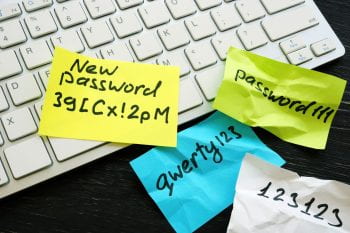
passwords written on sticky notes

The Cleveland Clinic Foundation (CCF) recently agreed to pay $7,600,000 to resolve allegations that it violated the False Claims Act (FCA) by submitting to the National Institutes of Health (NIH) federal grant applications and progress reports in which CCF failed to disclose that a key employee involved in administering the grants had pending and/or active […]